
The Six of Pentacles and the Art of Giving and Receiving
On the card of the merchant and his scales, the coins that fall into one open hand, and the quiet courage it takes to be given to.
 Six of Pentacles · full meaning →
Someone pays for lunch before you have even seen the bill. Or the person behind you at a checkout covers the few coins you were short, or a coworker quietly takes on the task you were sinking under. And something in you flinches. You didn't have to, you say. Before the thank you is even finished, part of your mind is already working out how to pay it back, and how soon.
For many of us, being given to is harder than giving. The tarot has a card that holds both sides of that exchange in one small scene: the Six of Pentacles.
The merchant and his scales
On the 1909 card, as Pamela Colman Smith drew it, a well-dressed man is standing upright, a pair of scales hanging level from one hand. With the other hand he lets coins drop into the cupped palm of a figure kneeling at his feet. A second figure kneels on the other side, hands lifted, still empty, waiting. Both of them wear worn cloaks. Above the three of them, six gold pentacles float in the air.
A. E. Waite described it plainly:
A person in the guise of a merchant weighs money in a pair of scales and distributes it to the needy and distressed. It is a testimony to his own success in life, as well as to his goodness of heart.
Notice that last sentence. Waite reads the picture as being, in part, about the giver: his success, his good heart. The coins say something about the one who hands them out. That is not a criticism. It is simply honest. Giving is never only about the gift.
(For the traditional upright and reversed meanings, see the card page for the Six of Pentacles.)
Level scales, uneven ground
Look at the shapes in the picture. The scales are level. The people are not. One stands; two kneel. Whatever fairness the scales promise, the bodies tell another story: one person has, and two people need.
This is the tender, uncomfortable center of the card. Real help often happens across a gap like this. Someone has more time, more money, more strength this month, and someone else has less. The card does not pretend the gap away. It shows it, and then shows the coins crossing it anyway.
What keeps the scene from feeling cold is the attention in it. The merchant is not tossing coins over his shoulder. He is looking down at the people in front of him, weighing what to give, placing it into a hand. There is a kind of dignity in being seen that clearly, even on your knees. And there is a kind of dignity in the kneeling figure's open hand, too. It takes something to hold your hand out.
Why receiving is so hard
Many of us were taught, one way or another, that needing things is a small failure. Being the one who helps feels safe: it keeps us standing, useful, in control. Being the one who is helped can feel like kneeling.
So we deflect. We say it was nothing. We accept a kindness but rush to even it out, a gift for a gift, a favor for a favor, as quickly as possible, so that nobody owes anybody for long.
Sometimes that instinct is wise. Some help does come with hooks in it, and the card's reversed meanings speak to giving with strings attached. But often what we are refusing is not a debt. It is closeness. To receive well is to let someone matter to you, and to let yourself matter to them.
Look at the second kneeling figure again, the one whose hands are still empty. Nothing is wrong with that person. Their turn simply hasn't come yet. Every one of us spends some seasons standing and some seasons kneeling, and very few people get to choose which.
Generosity that does not keep score
It is tempting to read the merchant's scales as a kind of bookkeeping: this much given, this much owed. But scales can weigh other things. They can weigh what is needed, rather than what is deserved. Read that way, the merchant is not measuring the people in front of him. He is measuring what will help.
There is a difference between generosity and accounting. Accounting remembers. It keeps a quiet tally of who called whom last, who paid last time, who showed up at whose door. Generosity looks at what is in front of it and asks a simpler question: what would help right now?
The Two of Cups shows two people exchanging at the same height, cup for cup. The Six of Pentacles is the harder, more common picture: an exchange between people who are not, at this moment, equals. It asks whether care can still flow there without anyone being made smaller. And the Nine of Pentacles, alone in her ripe garden, hints at where easy giving often comes from: a felt sense of having enough.
Small exchanges to try
Ask for one small thing. Not a rescue, just something modest you would usually manage alone: a lift to the station, someone to look over a letter, a friend to sit with you while you make a difficult phone call. Ask plainly, without a long apology attached. Then notice whether the person in front of you seems smaller or larger for being asked. Often people are glad to be the one with the coins.
Look at the direction of the flow. Over a few days, notice who gives to you in small ways: the friend who always texts first, the person who remembers how you take your tea. Then notice who you give to. You may find a relationship where it all runs one way. That isn't a verdict on anyone. It is simply something worth seeing.
Give at eye level. When you help someone this week, see if you can do it without standing over them. Ask what would actually help instead of guessing. Sit down beside them. Make the gift small enough that it doesn't need a speech. Good giving leaves the other person feeling more like themselves, not less.
If you want a card for the people who carry you, the Three of Cups and friendship pairs well with this one.
Open hands
The Six of Pentacles is often called a card of charity, and it is. But look long enough and it becomes a card about hands: one holding the scales, one letting go of coins, one cupped to catch them, two raised and waiting. Every hand in the picture is doing something brave.
Some weeks you will be the one with the scales. Some weeks you will be the one on your knees with your palms open. Neither is the whole of who you are.
The gift is only finished when someone lets it in.
Keep reading
-
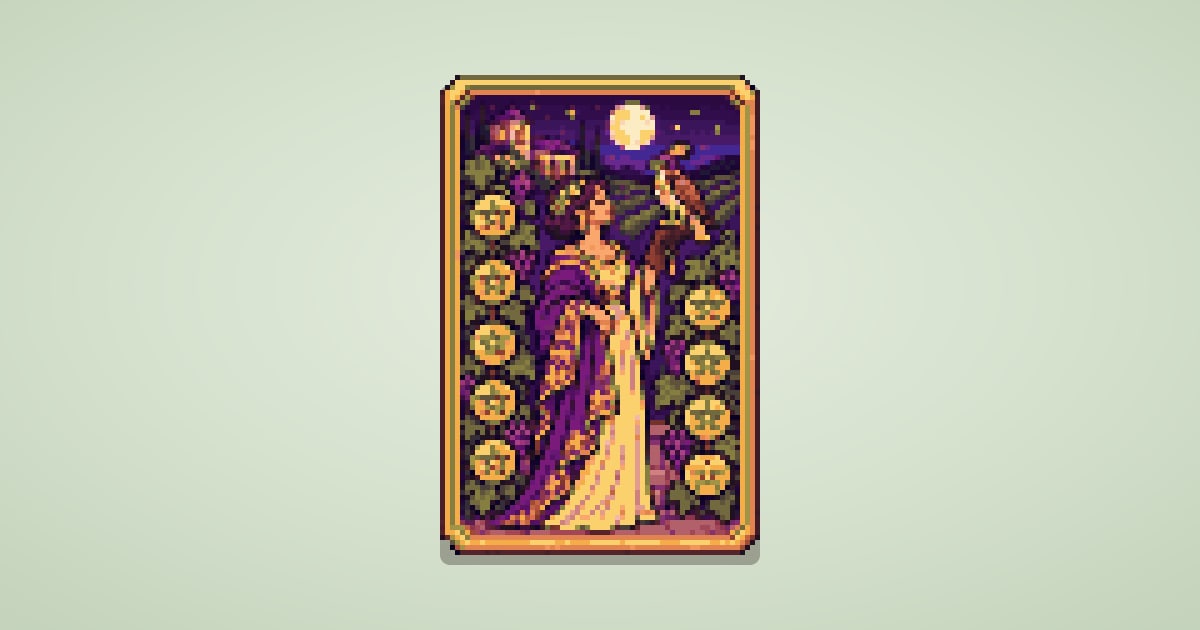 ReflectionsThe Nine of Pentacles and the Feeling of EnoughOn the card of the vineyard and the hooded bird, and a contentment that does not need anyone watching.
-
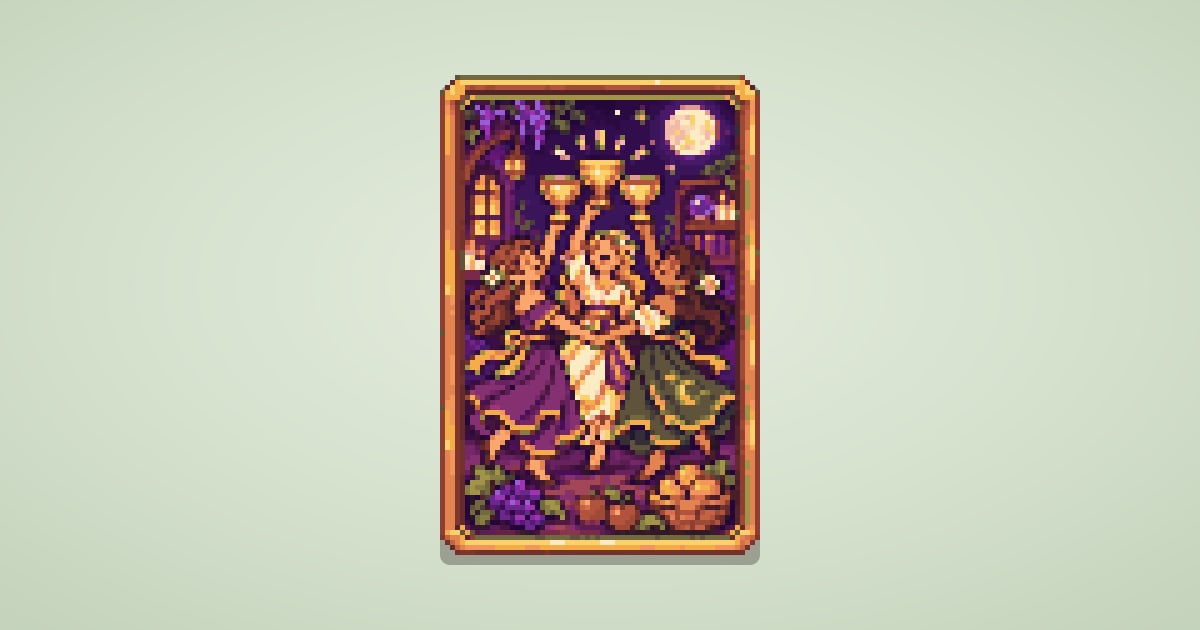 ReflectionsThe Three of Cups and the People Who Raise a Cup With YouOn the card of friendship, why Waite listed healing among its meanings, and the people who raise a cup with you.
-
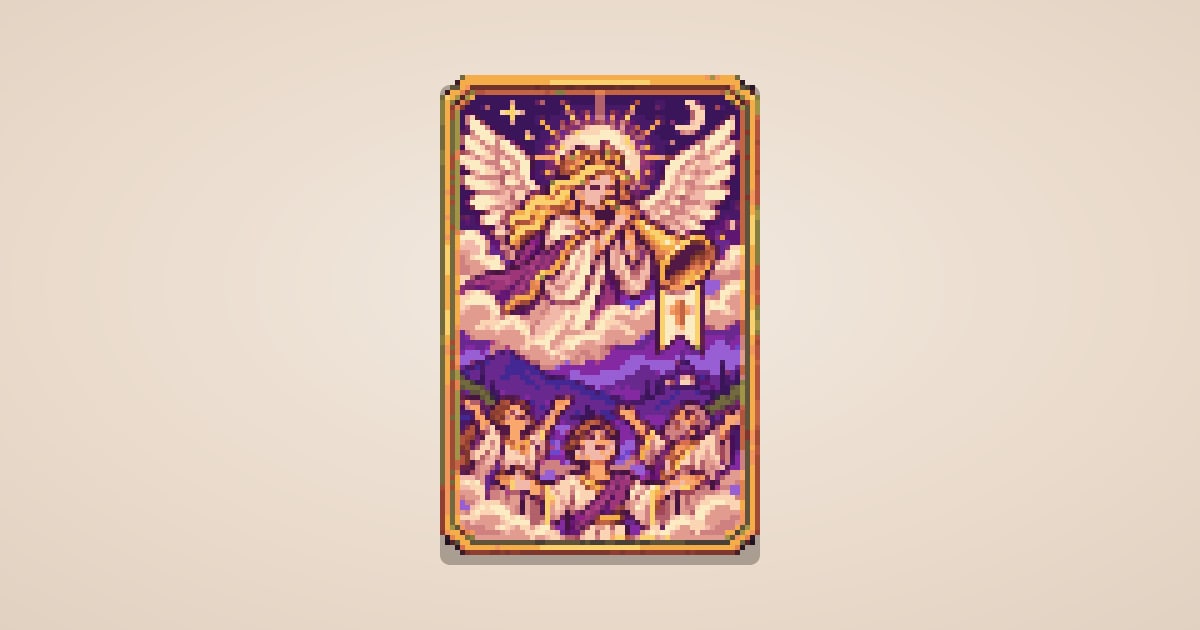 ReflectionsJudgement and Second Chances: Waking Up to Your Own LifeOn the card many people fear will condemn them, and why its picture looks less like a courtroom and more like a morning.