
Tarot and Grief: A Gentle Way to Sit With Loss and Remember
The cards cannot bring anyone back or speak for them. They can give a heavy feeling a picture, and give remembering a quiet place to sit.
If someone you love has died, or a loss of another kind has emptied out part of your life, we are sorry. You do not need to read this in order, or to the end. Take what helps.
Here is the honest answer to the question that may have brought you. Tarot can be a gentle companion in grief, but not in the way films suggest. It cannot put you in contact with the person you lost, carry messages from them, or tell you when the pain will ease. What it can do is smaller and, for some people, still worth having. A card gives a feeling a picture to stand in front of. Sitting with that picture for a few minutes can become a way of remembering, on purpose, in a quiet place you chose.
What a card can hold, and what it cannot
When grief is fresh, it can be hard to find words for anything. A tarot picture can lend you some. You look at a figure bowed over spilled cups and think: yes, that. Nobody has to explain it to you, and you do not have to explain it to anyone.
The limits are worth stating clearly, because grief makes everyone want answers. Drawing cards to ask whether a loved one is at peace, whether they forgive you, or what they would say now will only ever give you your own thoughts in a different shape. Those thoughts may be loving and wise. They are still yours. If you notice yourself drawing again and again, hoping the next card will finally say it, that is a sign to put the deck down for the day. We explain why in Can Tarot Predict the Future?
Cards that often meet grief
Any card can come up when you are grieving, and every card can be read gently. These are some that mourners often find themselves looking at for a long time. The descriptions follow the Rider-Waite-Smith pictures.
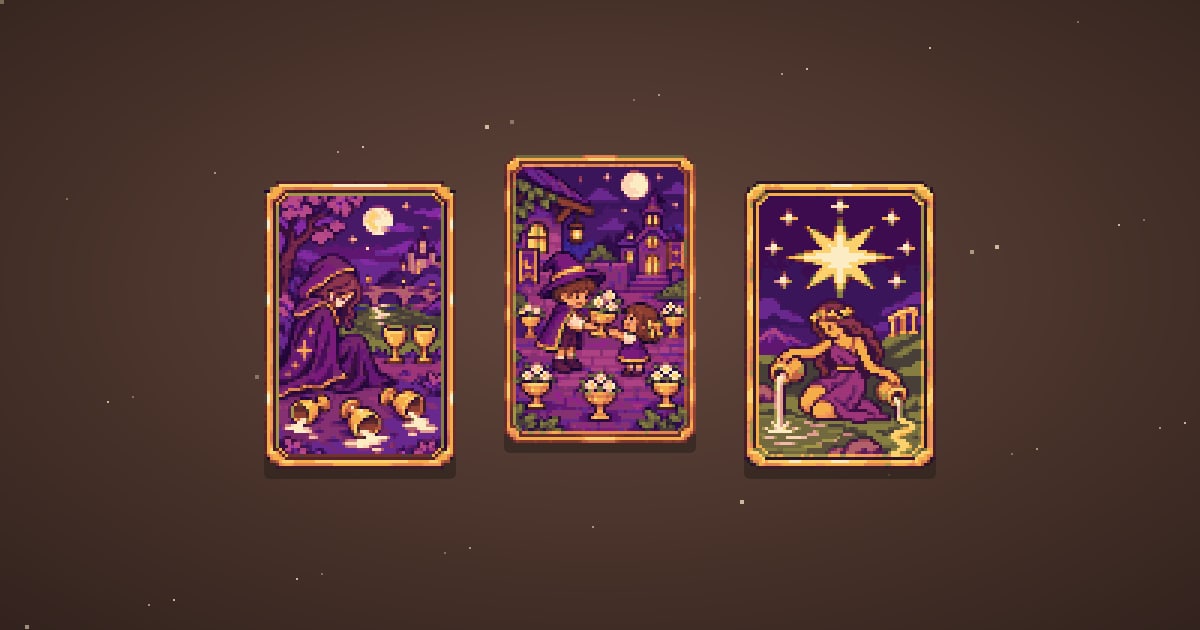
Five of Cups: what spilled, and what still stands
A figure in a long black cloak stands with head bowed over three cups lying on their sides. Behind them, out of view, two cups are still upright. Farther back, past the river, a small keep waits at the end of a bridge. A. E. Waite, who wrote the guide to this deck, summed it up in one line:
It is a card of loss, but something remains over; three have been taken, but two are left.
In grief, it matters what the card does not do. It does not tell the figure to turn around. The two standing cups will still be there whenever the mourner is ready to look, tomorrow or in a year. Facing the spilled cups for as long as needed is part of the picture, not a mistake in it. See the full Five of Cups page for more.
Three of Swords: the plain picture of heartache
A red heart, three swords through it, rain falling from gray clouds. Waite thought this meaning was "too simple and obvious" to need a list, and most mourners would agree. The Three of Swords does not soften anything. Its kindness is that it does not pretend. Sometimes being met exactly where it hurts is a relief.
Six of Cups: the garden of memory
Two children stand in an old garden, and the cups between them are filled with white flowers. One child offers a cup to the other. Waite called this a card of the past and of memories. For someone grieving, the Six of Cups can be an invitation to remember on purpose: a kitchen, a song in the car, the way they said your name. It honors happiness that came from the past without demanding that it return.
Death: change you did not ask for
Drawing Death soon after a real death can feel cruel. To say it plainly: the card does not foretell another loss, and it says nothing about anyone's health. Most readers treat it as the end of a chapter. In grief, that may simply name what you already know, that life on this side of the loss has changed. In the picture, a sun is rising between two towers in the distance, and the rider's banner carries a white rose. There is more on this card in our article on the Death card.
Ten of Swords: the lowest point
A figure lies face down under ten swords beneath a black sky, yet along the horizon there is a band of yellow light. Some days of grief feel like this card: flattened, with nothing left to do but lie still. Waite added that it is "not especially a card of violent death". The Ten of Swords does not ask you to get up before you can. We wrote a longer essay on this card.
The Star: hope that does not erase anything
Beneath one large star and seven smaller ones, a figure kneels by still water and pours from two jugs, one onto the land and one into the water. The Star is often read as hope, but it is a quiet kind. Nothing is fixed in the picture and nobody is cheering. Someone is tending things after a long night. In grief, it can stand for a small easing: a morning that feels slightly lighter, a memory that brings a smile before it brings tears. It does not mean you have finished grieving, or that you should.
Three quiet practices for remembering
None of these needs a full reading: one card, a notebook and a few unhurried minutes. Skip anything that feels like too much today.
A letter to the person. Draw one card and let it suggest a first sentence, then keep writing to the person you lost: what you wish you had said, what has happened since, what you miss. The card is only a way in. Nothing needs to be sent and nobody needs to read it. If writing to yourself feels easier, our letter to yourself page offers a gentle structure.
An anniversary reading. Birthdays, the date of the loss and holidays can arrive heavy. On a day like that, you might lay out three cards with simple questions: What do I carry from them? What does today need from me? What would be a kind thing to do for myself this evening? Read them slowly, then close the deck and do the kind thing, even if it is only a warm meal or an early night.
Grief keeps its own time
You may hear that grief comes in stages, or that it should ease after a certain number of months. Many people find their grief does not follow any order at all. It can feel lighter for weeks and then return in full on an ordinary Tuesday. That is not going backward. No card can tell you how long it will take, and there is no amount of time after which you ought to be over someone you loved.
If you are reading tarot through a loss, you might keep a short tarot journal and look back over it months from now, not to measure progress but to see how much you have carried. If you use the Emberlune app, Luna can keep those readings in a private journal for you.
When grief is too heavy to carry alone
Grief can be crushing, and needing help with it is not a failure. If you cannot sleep or eat for long stretches, if days are going by without your being able to function, or if thoughts of not wanting to live have started to appear, please talk to a person. That matters far more than any card. A friend, a family member, your doctor or a grief counselor can all be a place to start. In the United States you can call or text 988, and in the UK and Ireland you can call Samaritans on 116 123. Our safety page lists more support, and Find A Helpline can help you find free, confidential support in many other countries. If you might act on those thoughts, call your local emergency number now.
A small light to end on
The cards will not tell you where the person you love has gone, or when this will hurt less. They can give you ten minutes of stillness with a picture, a memory set down on paper and a reason to say their name. On the hardest days, that may be all a reading needs to be. If today is one of them, try a card for a hard day and then let yourself rest.
Keep reading
-
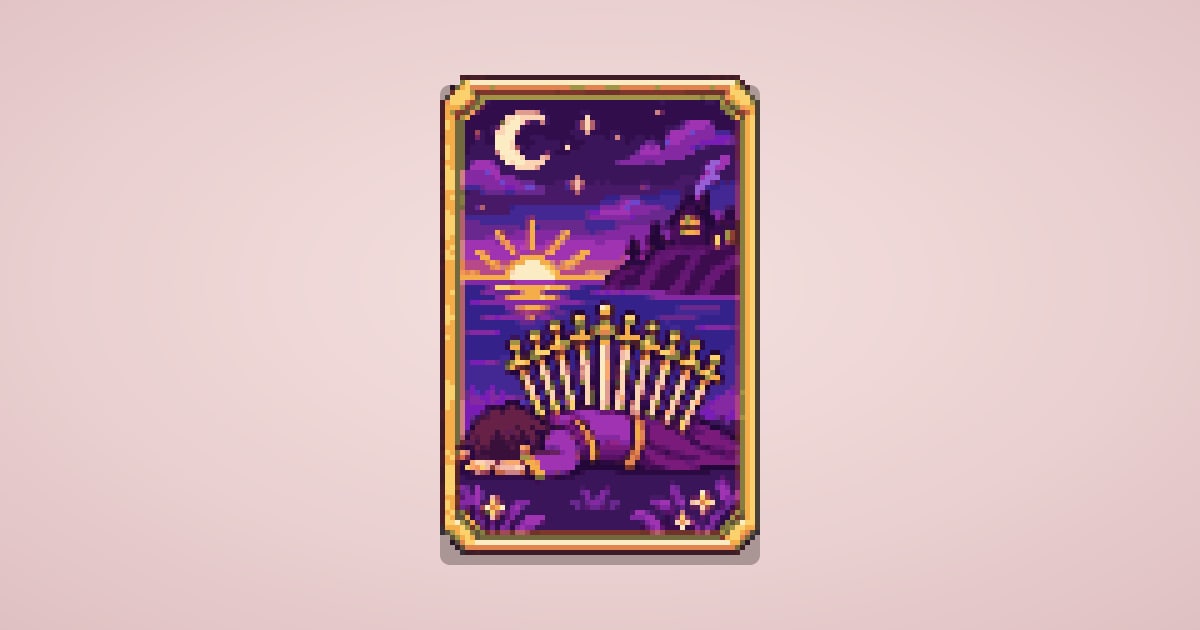 ReflectionsThe Ten of Swords and the Dawn Behind ItOn one of the most painful pictures in the deck, the calm water beside it, and the yellow line on the horizon.
-
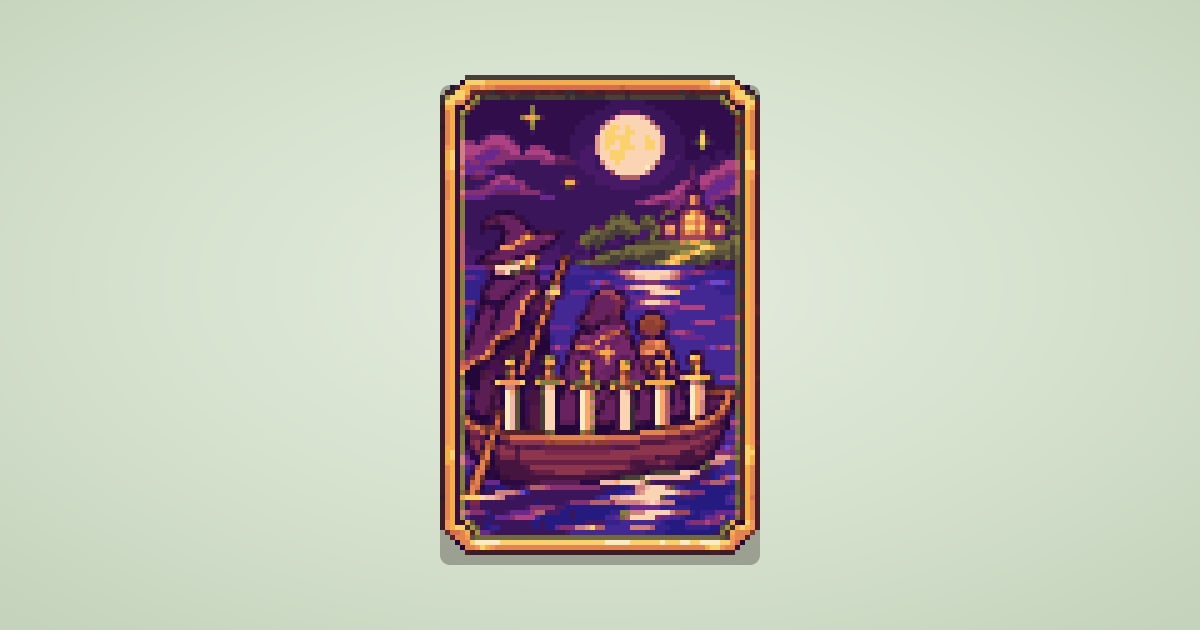 ReflectionsThe Six of Swords: Moving On SlowlyOn the card of leaving something behind, the rough water and the calm, and why the swords are still in the boat.
-
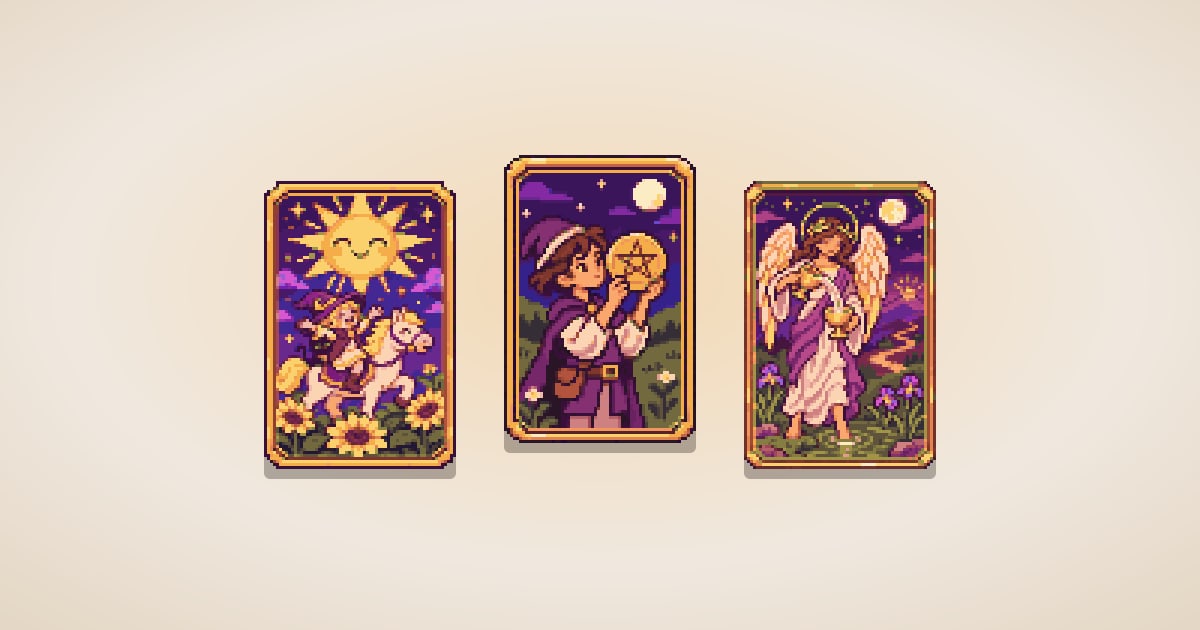 Self-DiscoveryA Morning Tarot Ritual: A Gentle Five-Minute Daily PracticeOne card with your tea or coffee, three plain questions and a line in a notebook, kept small enough that a missed morning never feels like failing.