
The Ten of Cups and What Home Really Means
On the card of the rainbow and the dancing children, the family picture it seems to promise, and the quieter kind of home it may really be about.
 Ten of Cups · full meaning →
Walk down almost any street at dusk and you pass other people's evenings. Through one window, a kitchen with steam on the glass. Through another, a few heads bent over a table, someone laughing at something you can't hear. From the sidewalk, in the cold, those rooms can look like the whole answer: this is what home is supposed to be, and everyone else seems to have it.
Many of us carry a picture like that somewhere. It tends to get louder as the holidays come closer and the advertisements fill up with long tables and matching sweaters. The tarot has a card that can look, at first glance, like the very same picture. It is the Ten of Cups. Look a little longer, though, and it says something kinder.
Under the rainbow
On the 1909 Rider-Waite-Smith card, ten cups arc across the sky in a rainbow. Below it, a man and a woman stand side by side, turned away from us toward the light, his arm around her, each lifting one free arm to the sky as if greeting it. Beside them, two children hold hands and dance. Beyond them, a river winds through green country, and on a rise among trees sits a small house.
Waite's description begins with the sky:
Appearance of Cups in a rainbow; it is contemplated in wonder and ecstasy by a man and woman below, evidently husband and wife.
Wonder and ecstasy. That is a big feeling for a card that also looks so domestic. And notice something small: the children are not looking at the rainbow at all. They are busy with each other, turning in their own dance. The grown-ups are amazed by the sky, and the children are simply glad where they are. Both fit in the same picture.
Not a portrait
It would be easy to read this card as a prize. Two parents, two children, a house, a bright day: the photograph meant to hang in the hallway. For anyone whose family is complicated, distant, grieving or gone, that reading can sting. A card that seems to announce this is happiness can feel like a door closing.
But the couple face the rainbow, not us. We hardly see who they are, and we are never told how they came to be standing there or what they are to the children. The card is not a portrait of one particular family. It is a picture of a feeling: a moment when the heart is full and nothing needs to be added.
Waite's meanings point the same way. He lists "Contentment, repose of the entire heart" and "perfection of human love and friendship". Friendship stands right there beside love. Further along, almost in passing, he adds "the town, village or country inhabited by the Querent." In his short list, home can be the place you live as much as the people you live with.
Three kinds of home
It helps to set this card beside two others. The Ten of Pentacles shows home as inheritance: an old man with his dogs, a family under an archway, a coat of arms on the wall. Among its meanings Waite lists "the abode of a family". That is home as roots, as what gets handed down.
The Three of Cups shows home as company: three friends in a garden, raising their cups to one another. Nothing on the card says they are related. They have chosen each other, and a slower essay on that card stays with them a while.
The Ten of Cups sits between those two. Its house is small and set back in the distance. What fills the foreground is not a building or a bloodline but people standing together under one sky. Many readers call this chosen family, and the card has room for it: the friends who cook together on the holidays, the neighbor who keeps a spare key, the group that meets every week and notices when you don't come.
When home hurts
For some people, the word home is not soft at all. It may mean a family that never understood them, a house they had to leave, or a person who is no longer there to make a place feel like home. If that is you, the Ten of Cups is not asking you to pretend otherwise, and it is not listing what you lack.
It may be more honest to let the card show you what you long for, and then to look, gently, for where some of that already exists. Belonging often turns up in pieces rather than in one finished picture: a friend's sofa, a familiar café, a voice on the phone that knows yours. Pieces still count. If grief is part of it, our essay on tarot and grief may keep you company. And if home is not a safe place for you at the moment, the people listed on our safety page can help, free and in confidence.
A few small things for this week
Notice where you exhale. Over the next few days, pay attention to the moments your body loosens without being asked: a certain room, a certain person, a certain walk. Those are clues to where home already lives for you, even if nobody else would call it that.
Set a place for someone. Home is something we make for each other as well as something we find. Invite one person to share an ordinary meal, or bring soup to someone having a hard week. It doesn't need to be a celebration. The cups on this card are full partly because there are so many people under them.
Make one corner warm. If you live alone, or somewhere that doesn't yet feel like yours, choose one small corner and tend it: a lamp you love, a plant, a chair by the window with a blanket on it. Being at home with yourself is a kind of home too, and it comes with you wherever you go.
The whole sky
Look at the card once more. The rainbow arches over everyone in it, the two gazing up and the two too busy dancing to notice. It does not check who belongs underneath.
Perhaps home is less a picture you have to fit into than a sky wide enough to stand under, with a few people near you, and room for more.
The card page has more on the Ten of Cups, upright and reversed. If one bond in particular is on your mind, spend some time with the Two of Cups and being met.
Keep reading
-
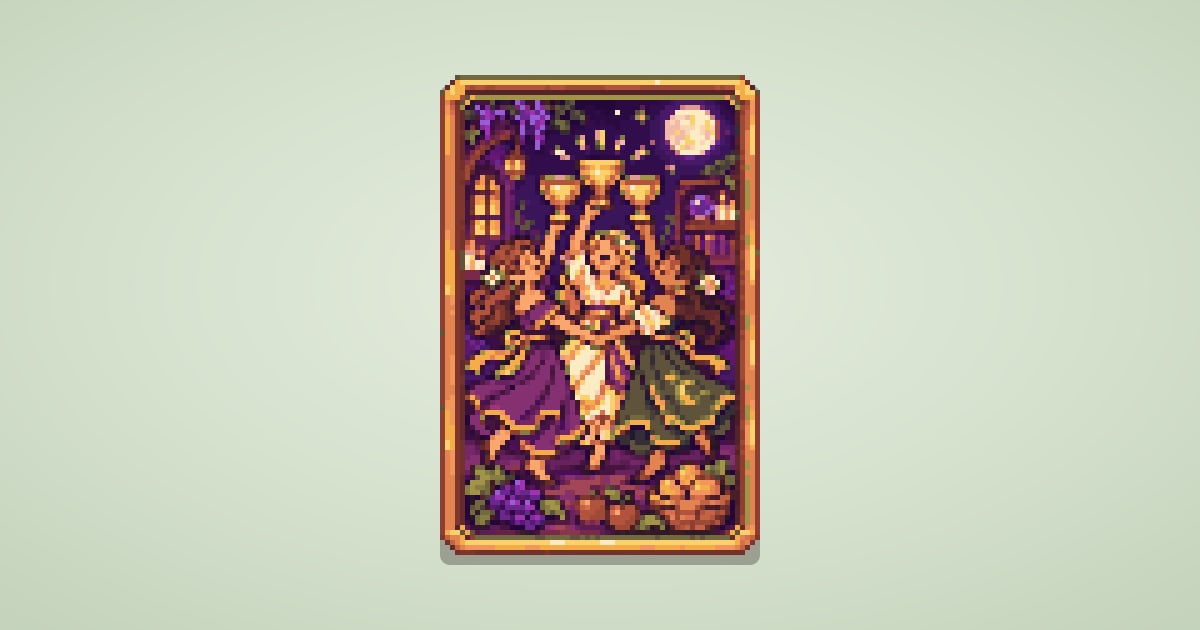 ReflectionsThe Three of Cups and the People Who Raise a Cup With YouOn the card of friendship, why Waite listed healing among its meanings, and the people who raise a cup with you.
-
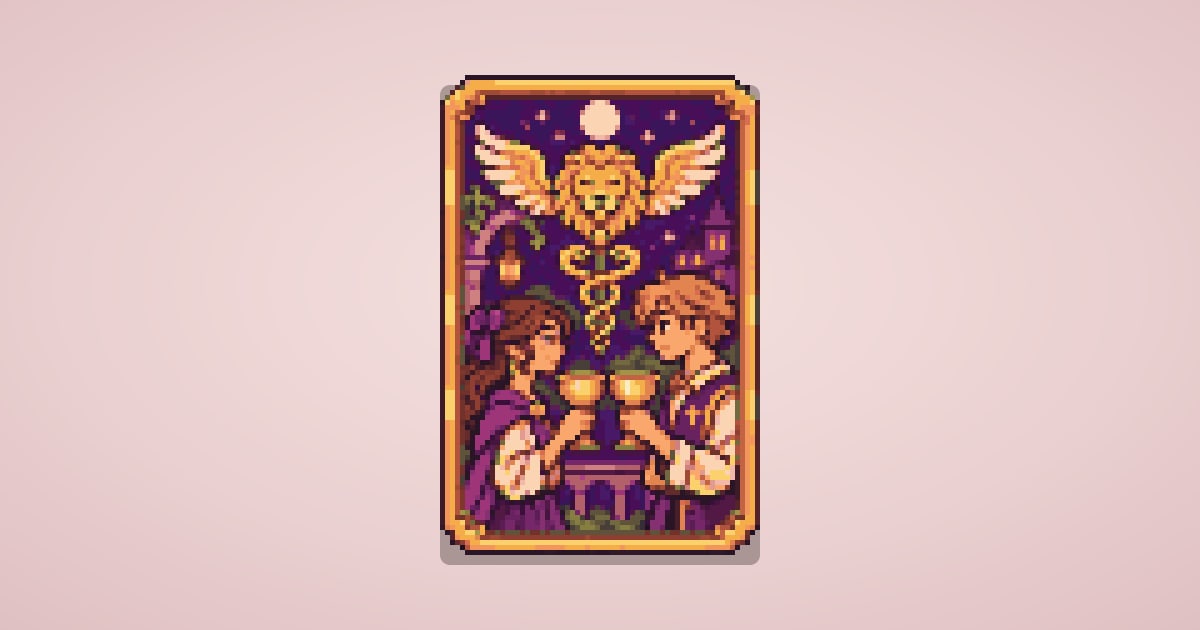 ReflectionsThe Two of Cups and Being MetOn the card of two people meeting at the same height, the strange winged sign between them, and the quiet wish to be heard all the way through.
-
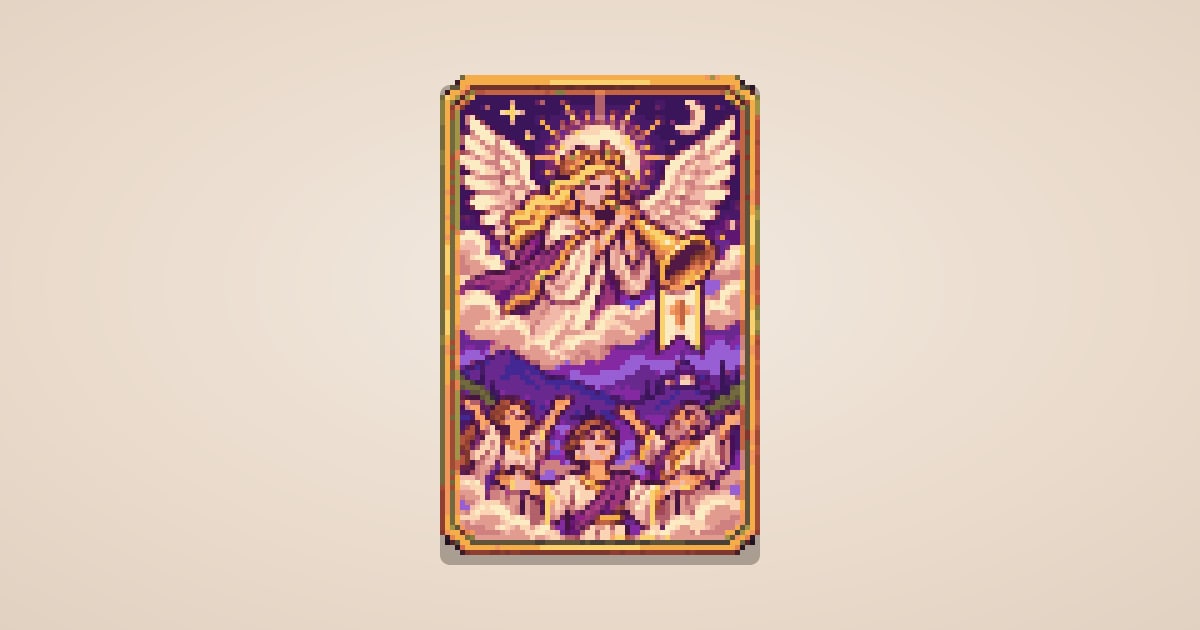 ReflectionsJudgement and Second Chances: Waking Up to Your Own LifeOn the card many people fear will condemn them, and why its picture looks less like a courtroom and more like a morning.