
The Tarot Deck Interview Spread: Getting to Know a New Deck
Six playful questions can help you study a new deck and choose how you want to practice with it.
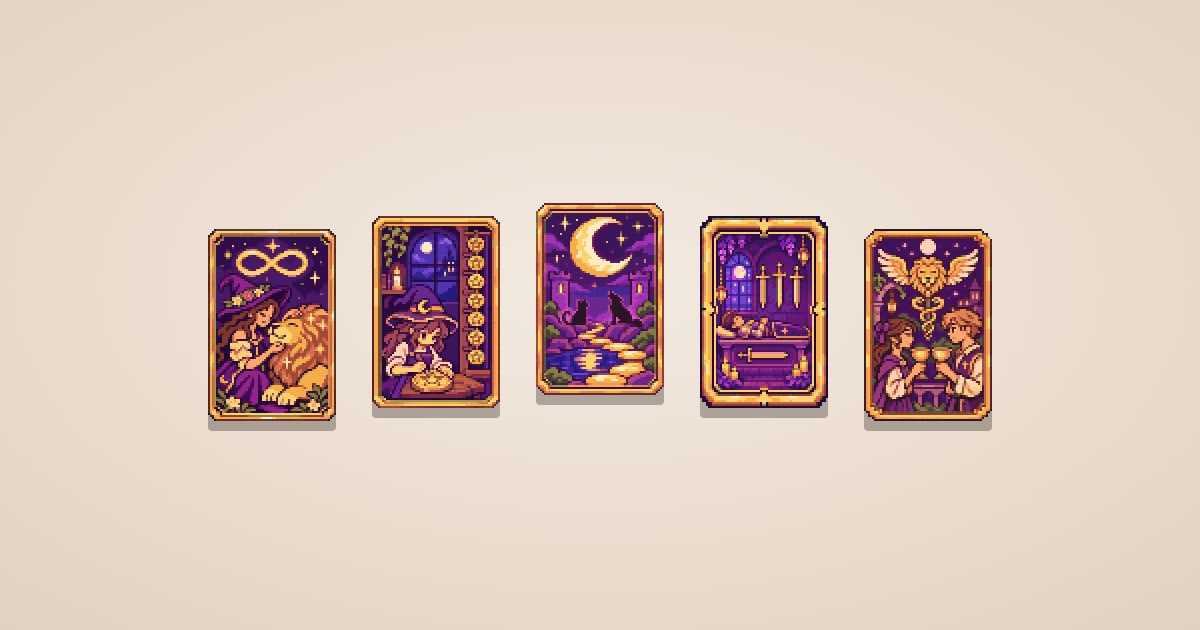
A new deck can leave you turning cards over, admiring the artwork, and wondering where to begin. A tarot deck interview spread gives that curiosity a little structure. You draw six cards, use each picture to explore a question, and finish with a few intentions for reading.
The interview language is playful personification. The deck is not a person: it has no thoughts, feelings, or intentions of its own. It is a collection of printed images, and its apparent voice comes from your responses to those images, the guidebook, and the associations you bring. Asking about its strongest quality can help you notice which visual details make reflection easier for you.
You can enjoy the conversation while keeping authorship of the answers. This exercise uses tarot for reflection. Treat every interpretation as something to explore and test through practice.
Before you draw
Give yourself about twenty minutes and somewhere to record the cards. Look through a few pictures first. Notice faces, colors, small objects, and how easy the scenes are to read. Keep the guidebook nearby so you can check unfamiliar symbols after forming an initial impression.
Choose upright cards for this first interview if that keeps things manageable. Shuffle comfortably, then write your intention in a sentence. You might want to practice describing pictures, become less dependent on keywords, or make space for a weekly reading.
The six positions below address the deck as "you." Read that wording as shorthand for my experience of working with these images. A striking draw offers an interpretation to investigate. It gives you no evidence of a deck's wishes, emotions, or private personality.
The six-card deck interview layout
Make a rectangle with three cards above and three below. Follow the numbers across the upper row first, then the lower row. Leave enough room to see each whole picture. Write the questions down before drawing so each position keeps its job.
 1Strongest quality2Learning3Limits4Working well5Shared practice6Partnership
| Position | Name | A reflective question |
|---|---|---|
| 1 | What is your strongest quality? | Which qualities in these images help me engage with a reading? |
| 2 | What will you help me learn? | What reading skill could I practice with this artwork? |
| 3 | What are your limits? | Where might the imagery or my assumptions limit an interpretation? |
| 4 | How can I work with you best? | What practical reading habit could support my attention? |
| 5 | What can we do together? | What kind of reflective practice would I like to develop? |
| 6 | What will our partnership feel like? | What tone do I want to cultivate, and what do I notice now? |
Position six explores your present response and a chosen intention. It does not forecast how your practice will go. Revisit the answer as your practice develops.
Give each answer something you can observe
For every card, begin with a visible detail. Then connect that detail to the position and write one tentative interpretation. Check the guidebook afterward, especially when the artist has changed a familiar scene.
In position one, you might notice that expressive faces help you name feelings. Position two could suggest practicing numbers or comparing suits. Keep both answers specific enough to use during your next reading.
Give position three particular care. A frightening picture can bring your uncertainty into focus. Ask whether you struggle with certain symbols, expect reassuring answers, or reach for meanings before examining the art. Every deck also has the same practical limits. Cards cannot establish facts about another person's thoughts or guarantee events.
Let position four suggest a manageable routine and position five a purpose for that routine. Position six can hold a feeling you already notice, such as curiosity or hesitation. You have permission to leave an answer unfinished.
An invented Rider-Waite-Smith interview
How to journal your interview
Start a page with the date, deck title, and your intention. Photograph the spread or list the cards in numbered order. Copy the position questions so you can understand the entry later without reconstructing the layout.
For each position, record a picture detail, your association, and a possible practice choice. Keep guidebook notes identifiable by writing the book title and page beside them. For help choosing a sustainable format, consult the tarot journal guide and borrow a recording method that suits you.
Finish with one sentence about what felt easy and one about what confused you. Specific observations, such as difficulty distinguishing two court cards, give you something to study next. Leave space underneath for a later response.
Revisit the interview after a month
Read the original entry before drawing again. Look through your intervening notes. Which intention did you actually practice? Which pictures became easier to describe? Where did your first impressions change?
Add a dated paragraph with examples. Perhaps you expected the deck to feel gentle, then found its facial expressions hard to interpret. Perhaps the quiet sessions helped, while weekly study felt too ambitious. Let those observations shape your next month.
You can repeat the six-card interview and compare interpretations, allowing different cards to prompt different questions. Keep both records. A repeated card gives you another chance to study an image, and a changed answer gives you room to revise an early assumption.
Once you know which questions support your practice, use the guide to creating a tarot spread to adapt your next check-in. End with one small intention you genuinely want to try.
Keep reading
-
 Self-DiscoveryHow to Start a Tarot Journal You'll Actually Want to KeepA five-line entry you can write in two minutes, how to spot the cards that keep coming back, and what to do when you read old pages.
-
 Tarot SpreadsHow to Create Your Own Tarot Spread (With Examples)Start from the question, write each position as a question of its own, test it once, and fix what doesn't work.
-
 Tarot SpreadsA Monthly Tarot Spread for the Start of a New MonthFive cards that turn the first days of a month into a quiet check-in, with a question waiting for you at the end.