
The Celtic Cross Tarot Spread: A Gentle, Position-by-Position Guide
Ten cards can feel like a lot. Here is how to give each one a clear job, then listen to them together.
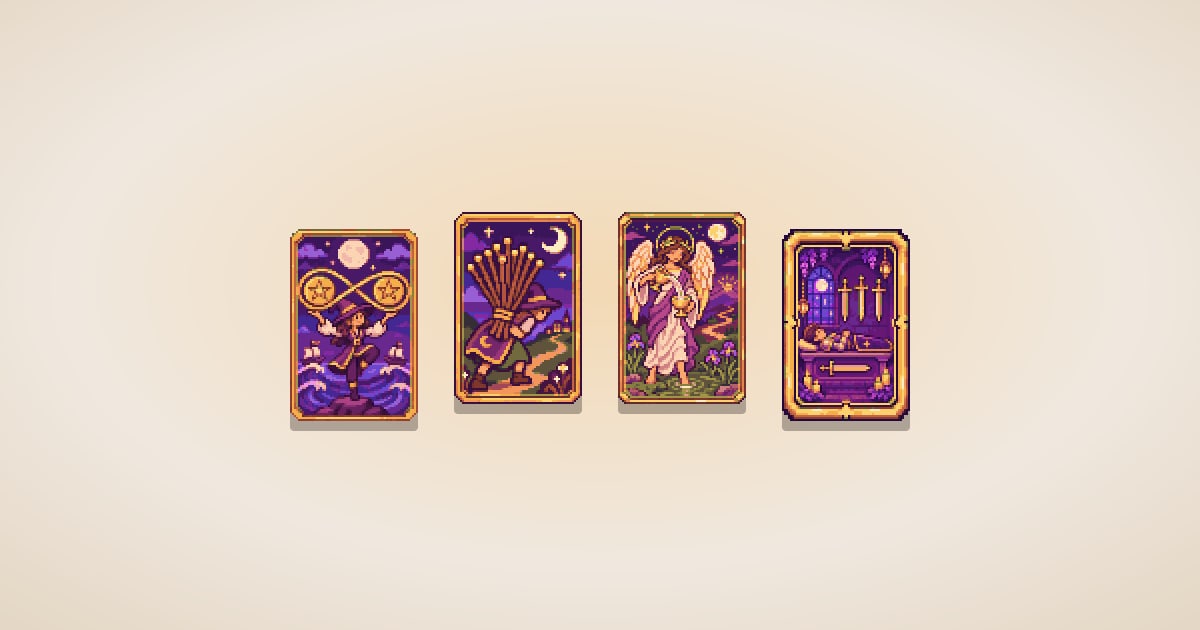
The Celtic Cross tarot spread gives ten cards ten different jobs. One describes the situation, another explores a difficulty, another asks what you hope for. You do not need to understand all ten at once. Begin with the position, notice the picture, and make one small connection to your question.
This guide uses tarot for reflection, never prediction. The cards offer images to think with. They cannot establish what will happen, reveal someone else's private thoughts, or decide what you must do.
What the Celtic Cross is, and where it comes from
The layout has two parts: a cross made from six cards and a vertical staff of four beside it. Together they help you explore a situation, your response, and possible directions.
A. E. Waite published it in The Pictorial Key to the Tarot (1910) under the heading "An Ancient Celtic Method of Divination". That is his title; the word ancient does not, by itself, establish an ancient Celtic origin. The source gives us a documented version of the method, not proof of that ancestry.
Waite wrote in the language of fortune-telling. Here we retain his arrangement and distinguish his historical labels from our reflective questions. In particular, his final result becomes a possibility to examine, with room for choices and changing circumstances.
Set out the ten positions
Choose a question about your own experience, such as What would help me make room for a creative hobby? Shuffle however you comfortably can, then deal ten cards in order. Reading them all upright is a useful starting choice.
Place 1 in the center, then lay 2 sideways across it, leaving enough of the first picture visible. Put 3 above the center and 4 below. For this guide, place 5 to the left and 6 to the right. Leave a gap farther right for the staff: 7 at the bottom, then 8, 9, and 10 upward, with 10 at the top.
Waite places the past and approaching cards according to the direction the significator faces. Our left-to-right arrangement fixes that choice for ease of practice. Write the numbers on scraps of paper if you lose your place.
His significator is a separately chosen card representing the person or matter, placed beneath card 1. It is optional here and additional to the ten drawn cards. You can simply use your written question instead.
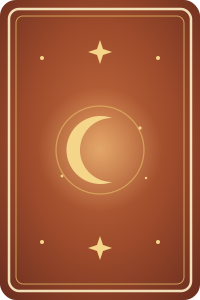 123Crown4Beneath5Behind6Before7Yourself8Surroundings9Hopes, fears10Where it may lead
The quoted labels below are Waite's wording. The questions are our adaptation; his historical pronouns can refer to any reader.
| Position | Traditional name | A reflective question for it |
|---|---|---|
| 1 | "This covers him" | What is the central experience right now? |
| 2 | "This crosses him" | What creates friction or asks for adjustment? |
| 3 | "This crowns him" | What am I aiming for? |
| 4 | "This is beneath him" | What already supports or underlies this? |
| 5 | "This is behind him" | What influence is passing away? |
| 6 | "This is before him" | What may be approaching as things stand? |
| 7 | "Himself" | How am I meeting this situation? |
| 8 | "His house" | What in my environment affects my options? |
| 9 | "His hopes or fears" | What do I want, and what worries me? |
| 10 | "What will come" | Where might this lead if nothing changes? |
The cross: positions 1 through 6
1. The situation
Begin with what occupies your attention. This card describes an aspect of the question, not your entire life. Name one visible detail, then connect it to something you recognize: This figure looks busy; I feel stretched between several tasks.
2. The crossing influence
Read this alongside card 1. What complicates the situation? A seemingly pleasant card can still describe a difficulty: generosity can become overcommitting, for example. The sideways placement marks its role in the layout; it does not automatically make the card reversed.
3. The crown
Waite describes an aim or ideal, and what might be achievable but is not yet actual. For this reading, ask what you consciously want. Keep it separate from a guarantee. An image of contentment here might describe your wish for ease, rather than evidence that ease is coming.
4. The foundation
Look for what is already established: a habit, value, resource, or condition supporting the situation. Waite's foundation concerns something already made actual. You do not need to turn it into a hidden psychological truth. A practical explanation, such as an inflexible schedule, may fit better.
5. The passing influence
This is what has recently shaped the question and may be loosening its hold. It can still matter without being the whole story now. Ask what you are carrying forward, and what you can acknowledge as belonging to an earlier stage.
6. What may be approaching
Read this as the next step as things stand, or an approaching theme you can usefully consider. A rest card might invite you to consider making space for recovery. It cannot tell you that a break will arrive unaided. This position carries no reliable date or promised event.
The staff: positions 7 through 10
7. Your stance
How are you responding? This might suggest an attitude, available strength, or familiar coping strategy. Treat the card as a question about your behavior, not a permanent label for your character. You can meet the same situation differently tomorrow.
8. Your environment
Waite's house includes surroundings and influences from other people. Consider observable conditions: your workload, shared space, available support, or competing responsibilities. If a person comes to mind, ask what you actually know about their actions. The card gives you no access to their unspoken intentions.
9. Hopes and fears
Desire and worry often gather around the same thing. You might long for independence while fearing the loss of support. Try reading this card both ways: I hope that... and I am afraid that... A frightening image here can represent an anxiety; drawing it does not confirm the anxiety is justified.
10. Where things may lead
Consider where things may lead if nothing changes. This is a prompt for exploring a possible consequence of the patterns you have named, not a forecast. Ask whether that direction appeals to you, what assumptions it depends on, and what action could support or interrupt it. You retain your judgment.
Read the cards as one story
The cross explores the situation; the staff adds your stance, surroundings, emotional investment, and a possible direction. Start with 1 and 2, then read a few pairs. You do not need ten separate speeches.
- 3 and 4: Compare the aim with the foundation. Does what you want have practical support? Is an established habit pulling against it?
- 5 and 6: Notice the transition between a passing influence and a possible next step. What would help you make that transition deliberately?
- 7 and 10: Connect your present response with the direction you are considering. What changes if you adjust that response?
- 9 with the whole spread: Notice where hope or fear colors your interpretation. Wanting an answer does not make it evidence.
Finish with three sentences: Here is what I recognize. Here is the tension I want to explore. Here is one thing I can try. If a connection feels forced, leave it open.
An everyday example
When ten cards feel like too much
Common beginner mistakes include changing a position's meaning after seeing the card, treating every challenging image as bad news, and drawing more cards whenever uncertainty appears. Write down the positions first, interpret the picture within its assigned question, and let an unclear card remain unclear.
Also resist making card 10 overrule the other nine. An appealing ending cannot erase practical limits, and an uncomfortable one cannot establish your fate. Check each interpretation against your actual circumstances.
You can practice with our three-card guide and past, present, future layout, or study the course lesson on spreads. A smaller reading deserves just as much care.
Sources
- A. E. Waite, The Pictorial Key to the Tarot (1910), Part III, section 7, "An Ancient Celtic Method of Divination": layout, significator, and original position wording. Card descriptions in Part II and meanings in Part III also inform the illustrative reading. Read in the public-domain text at sacred-texts.com.
Keep reading
-
 Tarot SpreadsThe Three-Card Tarot Spread: How to Read Past, Present, and FutureThree cards, read as one sentence instead of three definitions, with a full worked example.
-
 Tarot SpreadsHow to Create Your Own Tarot Spread (With Examples)Start from the question, write each position as a question of its own, test it once, and fix what doesn't work.
-
 Tarot SpreadsA Monthly Tarot Spread for the Start of a New MonthFive cards that turn the first days of a month into a quiet check-in, with a question waiting for you at the end.