
The Three of Swords and Heartbreak
On the plainest picture in the deck, the rain behind the heart, and how to look after yourself while something hurts.
 Three of Swords · full meaning →
Most of us know the moment. A message arrives, or a conversation ends, or someone says the thing you hoped they would never say. For a little while the world keeps its ordinary shape: the kettle still needs filling. Then the news lands somewhere under the ribs, and you understand that it is going to hurt for a while.
It might be a breakup. It might be a friend who has slowly drifted out of reach, a trust that turned out to be misplaced, a phone call with news nobody wanted, a door closing on something you had hoped for over years. Heartbreak doesn't belong only to romance. It comes whenever something we love is suddenly taken, or turns out not to be what we believed.
The tarot keeps a picture of exactly this. It is one of the plainest in the deck.
What the card shows
Look at the Three of Swords in the 1909 Rider-Waite-Smith deck and you will find no story at all. There is no figure weeping, no room, no landscape, no road leading away. A large red heart hangs in the middle of the card. Three swords pass straight through it, one upright and two crossing at angles. Behind it, heavy gray clouds fill the sky, and rain comes down in long slanting lines.
That is everything. A. E. Waite described the picture in a single line, and when he reached its meanings he seemed almost to set the list aside:
Removal, absence, delay, division, rupture, dispersion, and all that the design signifies naturally, being too simple and obvious to call for specific enumeration.
Anyone who has had their heart broken understands the picture before reading a word about it. It needs no key.
Why plainness can be a comfort
It might seem odd that such a stark image could help. Many cards are full of detail: robes and pillars, animals, little symbols tucked into corners. When you are hurting, though, detail can be too much. You don't want to decode anything. You want something to admit that this is how it feels.
The Three of Swords admits it. It doesn't tell you to look on the bright side, or that everything happens for a reason, or that you ought to be over it by now. It doesn't explain the pain away, and it doesn't make it pretty. There is a real kindness in a picture that simply agrees with you.
There is kindness, too, in what is missing. With no person on the card, there is no one to blame and no one you are told to be. The heart could belong to anyone. Perhaps that is why so many people recognize themselves in it: it leaves room for your own story, whatever its shape, without asking you to tell it.
The rain behind the heart
Stay with the card a little longer and the background begins to matter. Many readers link the suit of Swords to the mind: thoughts, words, hard truths. The heart in the picture has been struck by something like that, a sentence that can't be unsaid or a fact that can't be undone. But the rain isn't striking the heart. It is falling behind it, filling the sky.
Rain is weather. However hard it pours, it isn't the permanent climate of a place. Clouds move on. Storms wear themselves out. Nobody in a downpour has ever been right that it would rain forever.
That is not a promise about when the hurt will ease, and the card makes no such promise either. Some heartbreak softens in weeks. Some stays, quieter, for years. But the picture sets the pain inside weather rather than inside stone, and on the worst evenings that small difference can be something to hold.
The cards that sit beside it
The Five of Cups tells a later part of the same story. Its cloaked mourner stands with head lowered over three spilled cups, while two more wait upright behind, not yet noticed. Waite called it "a card of loss, but something remains over". Heartbreak narrows our attention to what is gone, and for a while it should. Later, it becomes possible to turn around and see what is still standing: a friend who keeps calling, work that still needs your hands, a body that kept breathing through all of it.
And after the rain comes The Star. A figure kneels by a pool beneath a clear night sky, pouring water from two jugs. Waite wrote: "She pours Water of Life from two great ewers, irrigating sea and land." In the Three of Swords, water falls on the heart from a gray sky, unasked. In The Star, it is poured slowly and on purpose, wherever it is needed. The same element, met at a different hour.
Carrying a hurting heart this week
You don't have to do anything with heartbreak. It is allowed to simply hurt. But here are a few small things to try or to notice.
Look after the body as if it has been through something. Because it has. A broken heart is tiring in a very physical way. Eat something warm, even if it is only toast. Drink a glass of water. Go to bed earlier than seems necessary. Treat the next few days the way you might treat getting over a fever: slowly, and without apologizing.
Let one person know. Not the whole story, unless you want to tell it. "I'm having a hard week" is enough. Pain tends to grow louder in secret, and a little quieter once someone else knows it is there.
Watch the real weather. Once a day, look out of a window and notice what the sky is doing. Clouds gather and break up. Rain starts and stops. Light changes over a single afternoon. It won't fix anything, but it keeps you company while the weather inside shifts too.
If the heartbreak is the end of a relationship, our guide to tarot after a breakup has a gentle spread for the weeks that follow. If the hurt keeps you awake, there is an essay for sleepless nights, written for exactly those hours. And if the pain has grown into more than you can carry, or dark thoughts about your own life have started to appear, talk to someone today. Our safety page can point you to a free line near you.
After the rain
The Three of Swords doesn't ask you to be brave about what happened, or wise, or finished with it. It only shows the heart as it is right now: pierced, and still red, and still there. The swords went through it. They did not make it disappear.
The clouds will do what clouds do. Until they move, you are allowed to stand in the rain and call it rain.
For upright and reversed meanings, see the Three of Swords card page.
Keep reading
-
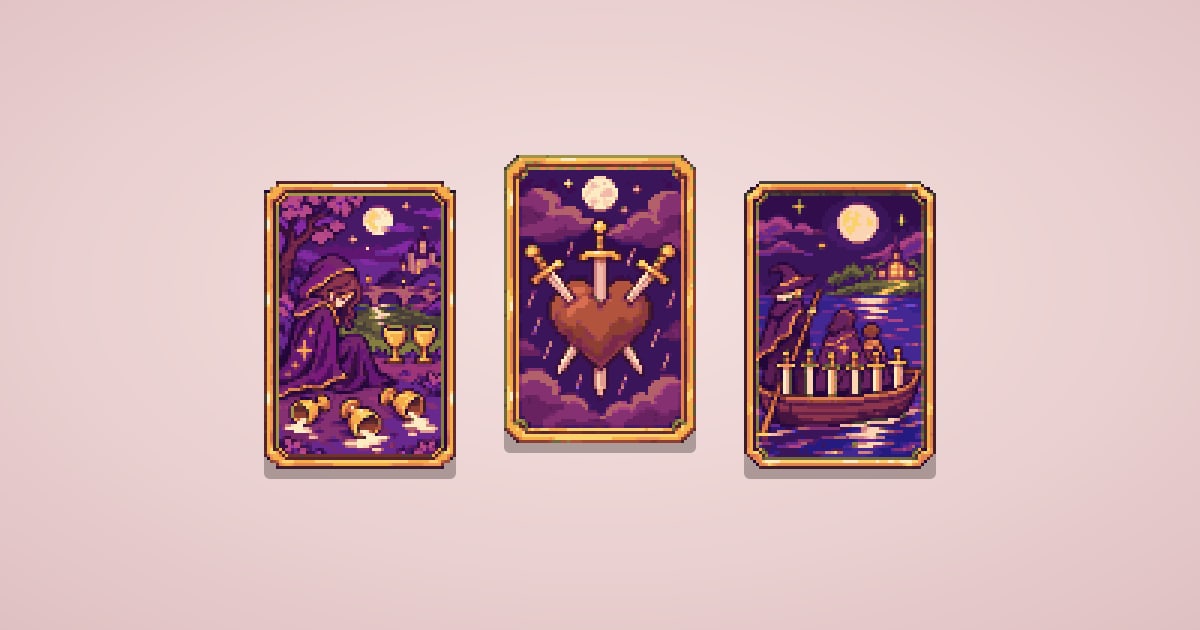 Love & RelationshipsTarot After a Breakup: A Gentle Way to Use the Cards While You HealWhen a reading helps, when it quietly makes things worse, and a three-card spread for the weeks after an ending.
-
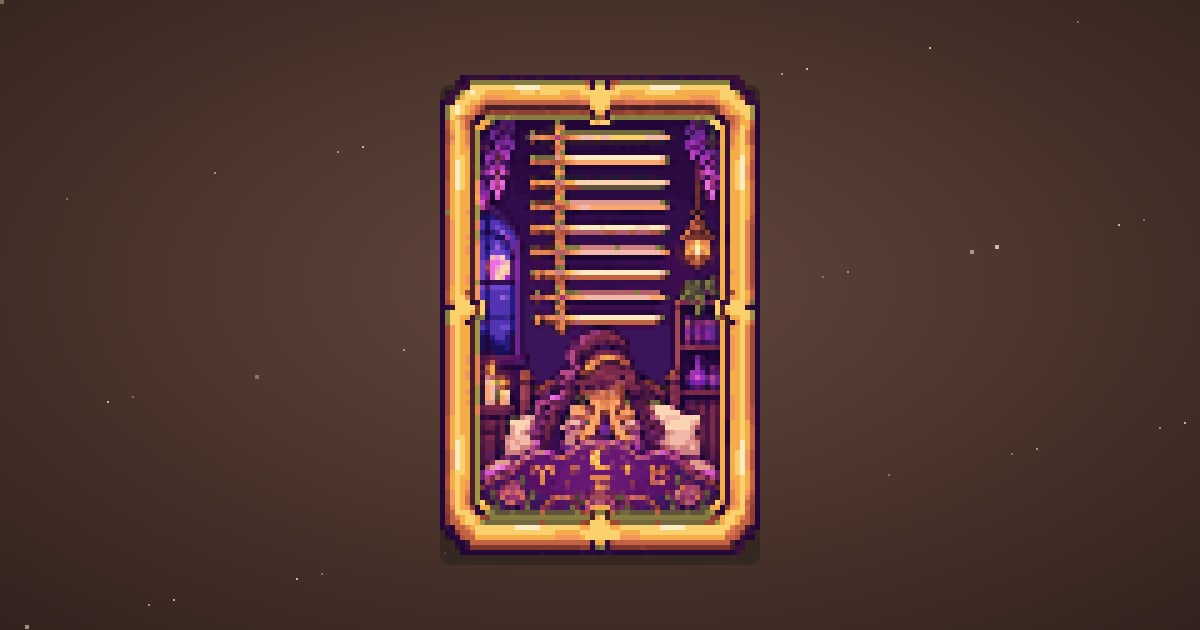 ReflectionsThe Nine of Swords and the 3 a.m. MindOn the card of sleepless nights, the swords that never touch her, and what to do with the thoughts that come in the dark.
-
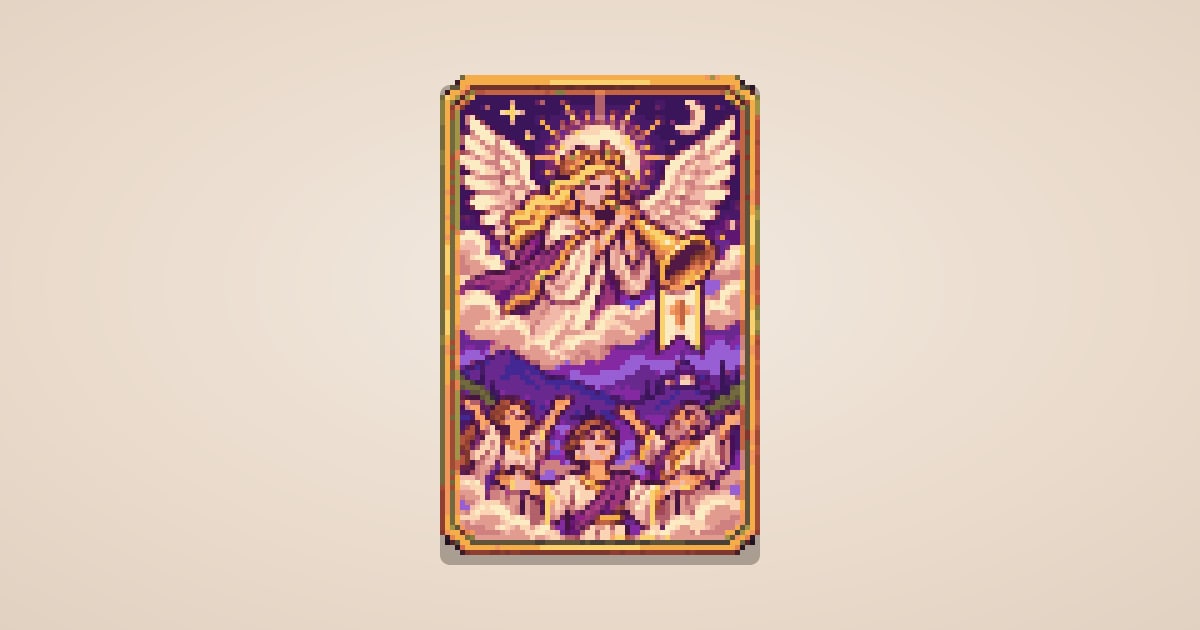 ReflectionsJudgement and Second Chances: Waking Up to Your Own LifeOn the card many people fear will condemn them, and why its picture looks less like a courtroom and more like a morning.